
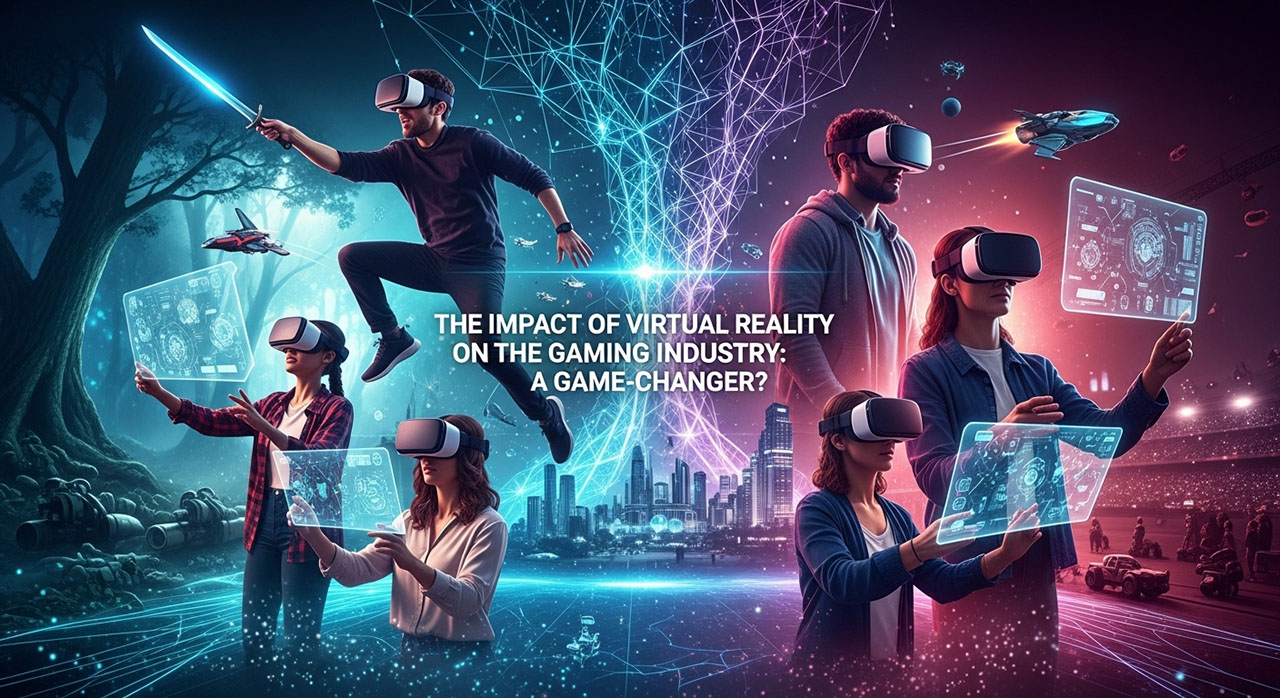
The Impact of Virtual Reality on the Gaming Industry: A Game-Changer?
The gaming industry has always been at the forefront of technological innovation, and Virtual Reality (VR) is no exception. From the rudimentary graphics of early video games to the immersive experiences offered today, gaming has continually evolved to captivate its audience. The advent of VR has brought about a significant transformation, offering players a level of immersion and interaction that was previously unimaginable. But is VR truly a game-changer for the gaming industry? This article delves into the various aspects of VR’s impact on gaming, examining its benefits, challenges, and future potential.
An Immersive Experience Like No Other
One of the most significant advantages of VR in gaming is the immersive experience it provides. Unlike traditional gaming, where players interact with a screen, VR places players directly in the game world. This level of immersion is achieved through advanced VR headsets that track head movement and high-quality graphics that create a realistic environment. Games such as “Half-Life: Alyx” and “Beat Saber” have demonstrated the potential of VR to engage players in ways that traditional gaming cannot.
Enhanced Interactivity
VR technology enhances interactivity in gaming by allowing players to use their body movements to control their in-game avatars. This is made possible through motion controllers and sensors that track the player’s movements, making gameplay more intuitive and natural. For instance, in a VR shooting game, players can physically duck, aim, and shoot, providing a more realistic experience. This level of interactivity not only makes games more engaging but also opens up new possibilities for game design and storytelling.
Challenges and Limitations
Despite its potential, VR gaming also faces several challenges. One of the main barriers is the cost of VR equipment. High-quality VR headsets and accessories can be expensive, limiting accessibility for many gamers. Additionally, VR gaming requires a significant amount of space and can cause motion sickness in some players, which can deter prolonged use. Developers also face challenges in creating content that fully utilizes VR technology while being accessible and enjoyable for a broad audience.
The Evolution of Social Gaming
VR has the potential to revolutionize social gaming by creating shared virtual spaces where players can interact in real-time. Platforms like Rec Room and VRChat have already begun to explore this territory, offering players the chance to meet, socialize, and play games together in a virtual setting. This social aspect of VR gaming adds a new dimension to multiplayer experiences, making them more engaging and interactive than ever before.
VR in Esports and Competitive Gaming
The esports industry has seen tremendous growth over the past decade, and VR is poised to make its mark in this arena as well. VR’s ability to create immersive and interactive experiences could redefine competitive gaming, offering new types of games that require physical skill and strategy. While VR esports is still in its infancy, games like “Echo Arena” and “Sprint Vector” are paving the way for this new frontier.
Future Prospects of VR in Gaming
The future of VR in gaming looks promising, with advancements in technology continually pushing the boundaries of what is possible. Companies are investing heavily in research and development to improve VR hardware and software, making it more accessible and user-friendly. The integration of augmented reality (AR) with VR could lead to even more immersive experiences, blending virtual and real-world elements in new and exciting ways.
Takeaways
Virtual Reality has undoubtedly had a significant impact on the gaming industry, offering new levels of immersion, interactivity, and social engagement. While there are challenges to overcome, the potential of VR to transform gaming is immense. As technology continues to advance, VR could become an integral part of the gaming landscape, offering experiences that were once the realm of science fiction. The journey of VR in gaming is only just beginning, and it is set to be an exciting ride for gamers and developers alike.
Educational and Training Applications
Beyond entertainment, VR gaming has found applications in education and training. Educational games in virtual reality can turn learning into an engaging and interactive experience, making complex subjects more accessible. For example, VR simulations can teach players about historical events by placing them in the middle of a historical reenactment, or they can provide a virtual lab environment for science students to conduct experiments without the need for physical materials.
In terms of training, VR is being used to simulate real-world scenarios that require practice and precision. This includes everything from military exercises to medical procedures, allowing trainees to gain experience in a controlled and safe environment. The trend of using VR in training is growing, highlighting its potential beyond traditional gaming applications.
Impact on Game Design and Development
The introduction of VR has influenced game design and development processes, encouraging developers to think outside the box. The need to create immersive and interactive environments has led to innovative design concepts and new storytelling techniques. Developers are challenged to create games that are not only visually stunning but also engaging on a sensory level, utilizing 3D audio, haptic feedback, and spatial awareness to enhance player experience.
Furthermore, VR has opened up new genres of gaming that were not possible before. Puzzle games, exploration-based games, and narrative-driven experiences have all been reimagined for VR, offering players new ways to engage with content. This evolution in game design not only enriches the gaming landscape but also pushes developers to continuously innovate.
VR’s Role in Accessibility and Inclusivity
As VR technology advances, there is a growing focus on making it more accessible and inclusive. Developers are working on solutions to accommodate players with disabilities, such as creating customizable controls and ensuring compatibility with assistive devices. VR has the potential to offer inclusive gaming experiences by allowing players to engage with games in ways that best suit their needs.
Moreover, VR can provide opportunities for social inclusion by connecting players from diverse backgrounds in a shared virtual space. This can help break down barriers and foster a sense of community among gamers worldwide, highlighting the positive social impact of VR in gaming.
Technological Advancements Driving VR Growth
The growth of VR in gaming is closely tied to technological advancements. Improvements in processing power, graphics capabilities, and display technology are making VR more realistic and accessible. Companies like Oculus, HTC, and Sony are leading the charge in VR innovation, constantly pushing the boundaries of what is possible.
Additionally, developments in artificial intelligence and machine learning are set to enhance VR experiences further. These technologies can be used to create more responsive and adaptive virtual environments, personalizing gaming experiences to suit individual player preferences. As these technologies continue to mature, the potential for VR in gaming is limitless.
Conclusion: A Game-Changer in the Making?
Virtual Reality is undoubtedly a transformative force in the gaming industry, offering new dimensions of play that were once the stuff of imagination. While challenges remain, the benefits of VR—such as unparalleled immersion, enhanced interactivity, and new social possibilities—position it as a game-changer in its own right. As technology evolves and becomes more accessible, VR is expected to play an increasingly prominent role in the gaming world.
For gamers, developers, and industry stakeholders, the rise of VR represents an exciting frontier brimming with potential. As we look to the future, it is clear that VR is not just a passing trend but a pivotal development that will continue to shape the landscape of gaming for years to come.
Economic Implications of VR in Gaming
The economic impact of VR on the gaming industry is multifaceted. On one hand, the initial investment for consumers can be high, as purchasing VR headsets and compatible accessories can be costly. However, as the technology becomes more mainstream and production costs decrease, prices are expected to become more affordable, broadening the market for VR gaming.
For developers and publishers, VR presents both opportunities and challenges. The development of VR games requires significant investment in terms of time and resources, given the complexity of creating immersive experiences. However, the potential returns are substantial, as VR titles can command higher price points than traditional games due to the unique experiences they offer. The growth of VR gaming also spurs new business models, such as subscription-based services and virtual goods sales, providing additional revenue streams for companies.
The Role of Indie Developers in VR Gaming
Indie developers have played a crucial role in the growth of VR gaming, often pushing the boundaries of creativity and innovation. With fewer resources than major studios, indie developers are more agile and willing to experiment with new ideas and concepts. This has led to the creation of unique and groundbreaking VR experiences that capture the attention of both players and larger industry players alike.
Platforms like Steam and Oculus Store provide indie developers with the opportunity to reach a global audience, allowing them to showcase their VR games alongside titles from larger studios. The success of indie games in the VR space demonstrates the potential for creativity and innovation to drive the industry’s growth.
VR Gaming and the Future of Entertainment
Beyond gaming, VR is poised to revolutionize the broader entertainment industry. The ability to create immersive environments is not limited to games; it extends to film, live events, and virtual tourism. For instance, VR can transport users to a live concert or allow them to explore historical sites from the comfort of their homes, offering new ways to experience entertainment.
As VR technology continues to evolve, the lines between different forms of entertainment will blur, creating hybrid experiences that combine elements of gaming, film, and live performances. This convergence presents exciting possibilities for content creators and consumers alike.
Conclusion: Embracing the VR Revolution
The impact of Virtual Reality on the gaming industry is profound, marking a significant shift in how games are developed, played, and experienced. While challenges remain, the potential for innovation and growth in the VR space is immense. As technology advances and becomes more accessible, the role of VR in gaming is expected to expand, offering new opportunities for players, developers, and the industry as a whole.
Embracing the VR revolution means embracing a future where gaming is more immersive, interactive, and inclusive than ever before. As we continue to explore the possibilities of VR, one thing is clear: the journey has only just begun, and the future of gaming promises to be an exciting adventure.













Leave a Reply