
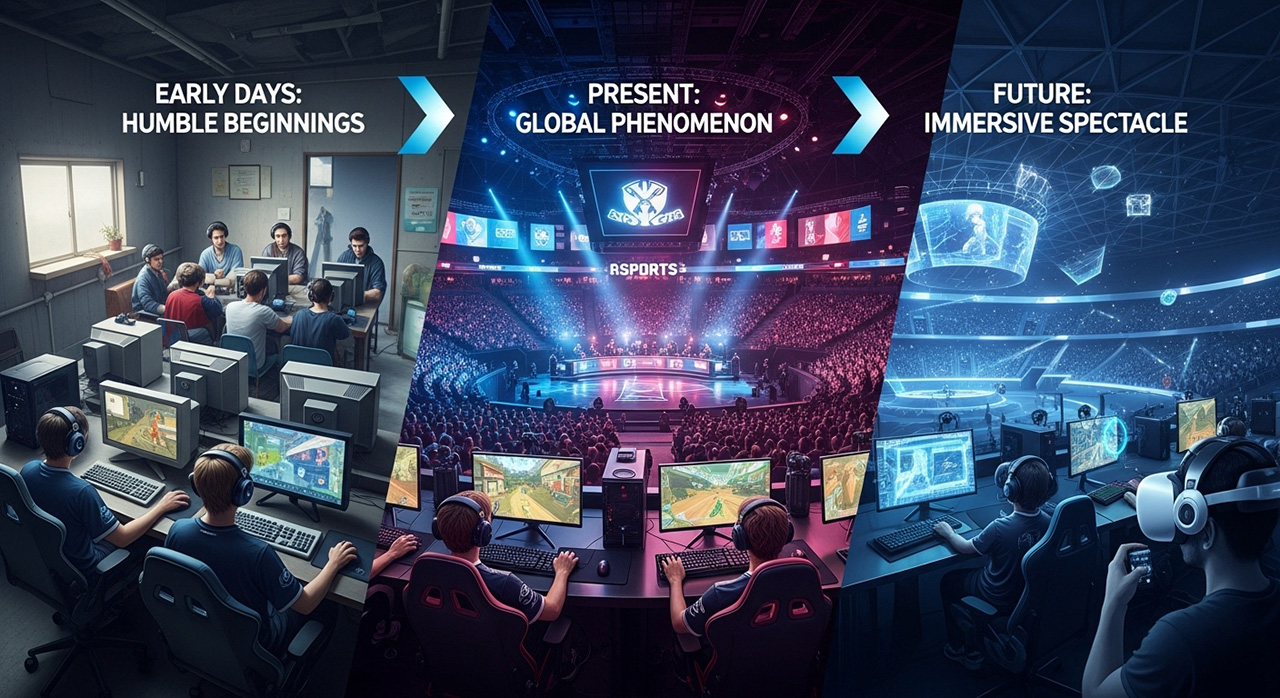
The Evolution of Esports: A Look at the Rise and Future of Competitive Gaming
Over the past few decades, the world of competitive gaming has transformed from a niche hobby into a global phenomenon. Once considered a pastime for the few, esports has rapidly grown into a billion-dollar industry that captivates millions of fans worldwide. This evolution has been driven by technological advancements, cultural shifts, and the increasing accessibility of games across various platforms.
The Roots of Competitive Gaming
The origins of esports can be traced back to the early 1970s when the first known video game competition took place at Stanford University. The game of choice was “Spacewar!”, and the winner took home a year’s subscription to Rolling Stone magazine. During the 1980s, arcade games like Pac-Man and Space Invaders fueled a burgeoning competitive scene, with players striving to achieve the highest scores.
As personal computers became more widespread, games like “Quake” and “Doom” emerged, setting the stage for the first organized esports tournaments. The 1997 Red Annihilation tournament for “Quake” is often cited as a pivotal moment, where the winner drove off in a Ferrari, signaling the potential for esports as a lucrative endeavor.
The Rise of Online Gaming and Streaming Platforms
The advent of the internet and the rise of online gaming in the late 1990s and early 2000s revolutionized the esports landscape. Games like “StarCraft” and “Counter-Strike” became incredibly popular, with tournaments drawing thousands of participants and spectators from around the world.
Platforms like Twitch, launched in 2011, further accelerated the growth of esports by providing a medium for players to stream their gameplay live to audiences. This not only allowed fans to watch their favorite players in real-time but also helped build communities around specific games and personalities.
Major Esports Titles and Their Impact
Several games have played significant roles in the rise of esports. “League of Legends”, released in 2009, quickly became one of the most popular esports titles, with its world championship series drawing massive viewership numbers. Similarly, games like “Dota 2” and “Fortnite” have hosted tournaments with prize pools reaching tens of millions of dollars.
These games have not only entertained millions but have also shaped the esports industry by setting standards for competitive play, community involvement, and professional conduct. Their success has demonstrated the viability of esports as both a sport and a business.
Esports as a Mainstream Entertainment
Today, esports is mainstream entertainment, rivaling traditional sports in terms of viewership and cultural impact. Major networks, including ESPN and BBC, have begun broadcasting esports events, further legitimizing the industry. The inclusion of esports in events like the Asian Games and discussions about its potential entry into the Olympics highlight its growing acceptance.
Brands and sponsors have also recognized the potential of esports, with many non-endemic companies investing in teams, events, and individual players. This influx of sponsorship has enabled esports organizations to professionalize, offering players salaries, health benefits, and training facilities akin to those in traditional sports.
The Future of Esports
As esports continues to grow, we can expect several trends to shape its future. One significant development is the increased investment in collegiate esports programs. Universities around the world are establishing varsity teams and offering scholarships, recognizing the potential of esports to attract students and enhance campus life.
Technological advancements, such as virtual reality and augmented reality, may also redefine the esports experience. These innovations could lead to new forms of interactive gameplay and viewing experiences, further blurring the lines between players and spectators.
Moreover, the ongoing digital transformation of global society will likely bolster the growth of esports. As digital connectivity improves, more people worldwide will have access to gaming, providing a larger pool of talent and audiences.
Takeaways
The evolution of esports is a testament to the power of technology and community in shaping new forms of entertainment. From humble beginnings to a multi-billion-dollar industry, esports has come a long way and shows no signs of slowing down. As we look to the future, the potential for further growth and innovation is immense, promising exciting opportunities for players, fans, and businesses alike.
For those interested in the ongoing developments in the world of esports, keeping an eye on the latest game news will provide insights into the ever-evolving landscape of competitive gaming.
The Role of Community in Esports
One of the most compelling aspects of esports is the strong sense of community it fosters. Unlike traditional sports, esports communities are often built online, transcending geographical boundaries. Platforms such as Discord and Reddit provide spaces for fans to connect, discuss strategies, and share their passion for games.
These communities are not only crucial for fan engagement but also play a significant role in the development and balance of games. Developers often rely on feedback from dedicated player bases to make updates and improvements, ensuring the longevity and relevance of their games.
Challenges Facing the Esports Industry
Despite its rapid growth, the esports industry faces several challenges. One major issue is the sustainability of esports organizations. Many teams struggle with financial stability, relying heavily on sponsorships and tournament winnings, which can be volatile sources of income.
Player burnout is another concern. The intense competition and rigorous training schedules demand significant physical and mental endurance, often leading to short career spans for professional players. Addressing these issues requires a concerted effort from teams, leagues, and governing bodies to provide support systems and ensure the well-being of players.
Regulation and Governance in Esports
As esports continues to grow, the need for regulation and governance becomes increasingly important. Unlike traditional sports, which are often governed by well-established bodies, esports lacks a unified global governing structure. This can lead to inconsistencies in rules, player contracts, and tournament standards.
Efforts are being made to create more structured governance, with organizations like the Esports Integrity Commission (ESIC) working to promote fair play and integrity. These measures are crucial for the credibility and legitimacy of esports as it continues to mature as an industry.
The Economic Impact of Esports
The economic impact of esports is significant, with the industry contributing to job creation, technological innovation, and local economies. Cities that host major tournaments often see boosts in tourism and hospitality sectors, as fans travel to attend events.
Furthermore, esports has spurred growth in related industries, such as streaming services, gaming hardware, and content creation. This ripple effect extends beyond gaming, as companies explore new ways to engage with digital audiences and leverage the popularity of esports to reach younger demographics.
Esports and Education
The intersection of esports and education is an emerging trend that holds great promise. Educational institutions are increasingly recognizing the educational benefits of gaming, such as improved cognitive skills, teamwork, and strategic thinking.
Some schools have integrated esports into their curricula, offering courses that cover game design, marketing, and management. This prepares students for careers in the gaming industry and beyond, highlighting the versatility and relevance of skills gained through esports.
Conclusion: The Ever-Expanding World of Esports
Esports is more than just a trend; it is a cultural shift that reflects broader changes in entertainment, technology, and society. As we look to the future, the potential for esports to continue growing and influencing various sectors is immense.
Whether you’re a seasoned gamer, a casual observer, or a business looking to tap into this dynamic industry, staying informed about the latest developments in esports will be essential. As esports continues to break boundaries and redefine what it means to be an athlete, its impact will undoubtedly be felt for generations to come.
Esports and Innovation
The esports industry is a hotbed for innovation, pushing the boundaries of technology and entertainment. Game developers are constantly experimenting with new mechanics and features to enhance the competitive experience. This drive for innovation extends to broadcasting, where immersive technologies like augmented reality (AR) and virtual reality (VR) offer fans new ways to experience events.
Moreover, esports has encouraged advancements in artificial intelligence, particularly in areas like game balancing and player behavior analysis. AI tools are being developed to assist in training, providing players with insights into their gameplay and offering personalized feedback to improve performance.
Esports and Social Impact
Beyond entertainment, esports holds the potential for significant social impact. It offers a platform for promoting diversity and inclusion, with initiatives aimed at increasing participation among women and underrepresented groups. Organizations are actively working to create safer and more inclusive environments, addressing issues such as harassment and discrimination.
Esports also plays a role in philanthropy, with many tournaments and events raising money for various charitable causes. This showcases the community’s ability to unite for positive change, leveraging the power of gaming to make a difference in the world.
The Intersection of Esports and Traditional Sports
The relationship between esports and traditional sports continues to evolve, with increasing collaboration and crossover. Many sports teams and athletes have invested in esports, recognizing its potential to engage younger audiences and expand their brand reach. This has led to the creation of esports teams affiliated with traditional sports franchises, blending the worlds of physical and digital competition.
Additionally, esports events have begun to integrate elements of traditional sports, such as physical fitness programs for players and the incorporation of sports-like production values in broadcasts. This convergence highlights the shared values of competition, teamwork, and excellence that underpin both industries.
Challenges in Maintaining Competitive Balance
Maintaining competitive balance is a continual challenge in esports. Game developers must regularly update and patch games to ensure fairness and prevent any single strategy or character from dominating. This requires a delicate balance, as frequent changes can disrupt the meta and frustrate players.
Moreover, the rapid pace of change in esports means that players and teams must constantly adapt to stay competitive. This dynamic environment keeps the scene fresh and exciting but also demands resilience and adaptability from all participants.
The Cultural Significance of Esports
Esports has become a significant cultural force, influencing fashion, music, and even language. Popular esports personalities and streamers have become celebrities in their own right, with fan followings rivaling those of traditional celebrities. This cultural impact is evident in the way gaming terminology and references permeate mainstream media and conversations.
As esports continues to grow, its cultural significance will likely expand, shaping the way we view entertainment and interaction in the digital age. This cultural relevance underscores the importance of esports as more than just a form of entertainment, but as a reflection of contemporary society.
Final Thoughts
The journey of esports from its humble beginnings to its current status as a global powerhouse is nothing short of remarkable. Its continued evolution promises to bring further excitement, challenges, and opportunities for innovation. As the lines between digital and physical worlds continue to blur, esports stands at the forefront of this transformation, offering unique insights into the future of competition and entertainment.
For anyone interested in exploring the depths of this dynamic industry, staying informed and engaged with the latest esports news will be crucial. Whether you’re a player, fan, or industry professional, the world of esports invites you to be a part of its exciting journey.











Leave a Reply