
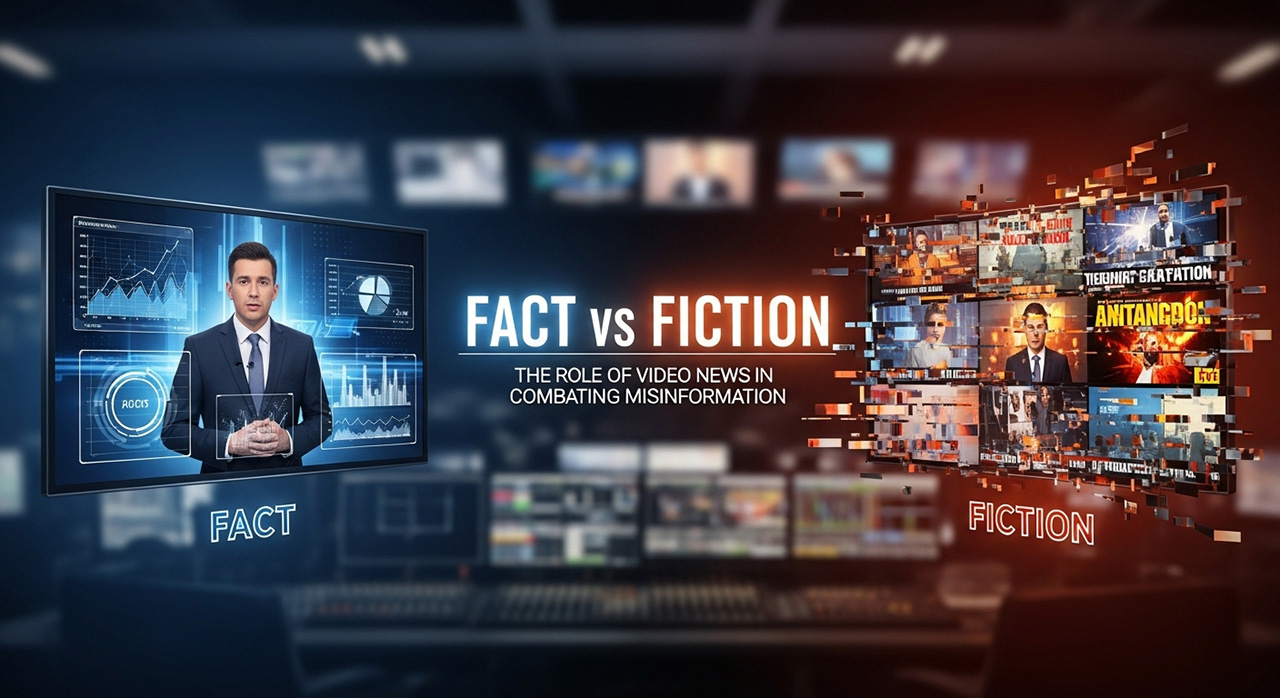
Fact vs Fiction: The Role of Video News in Combating Misinformation
In today’s digital age, the spread of misinformation has become a pressing issue, with video news playing a pivotal role in both disseminating and combating false information. As the internet evolves, so do the ways in which people consume information. Video news, due to its visual and auditory appeal, has emerged as a leading format for news consumption. This blog post delves into how video news can be both a tool for spreading misinformation and a powerful means to combat it.
The Rise of Video News
Over the past decade, video content has taken center stage in the digital landscape. With platforms like YouTube, Facebook, and TikTok, video news has become easily accessible to a global audience. The Pew Research Center highlights that younger audiences are increasingly turning to online videos as their primary news source, bypassing traditional media outlets.
This shift is driven by several factors, including the convenience of accessing news on-the-go, the ability to consume information quickly, and the engaging format that video provides. However, this shift also presents unique challenges in verifying the authenticity of the content being consumed.
The Challenge of Misinformation in Video News
Misinformation, particularly in video format, can spread rapidly due to the shareable nature of videos. Videos can easily go viral, reaching millions of viewers within hours. This makes them a potent vehicle for misinformation, especially when they are crafted to evoke strong emotional responses.
A significant challenge is the deliberate editing of videos to mislead viewers. Techniques such as deepfakes, where artificial intelligence is used to create realistic-looking but fake videos, have added a complex layer to the misinformation landscape. According to Brookings Institution, deepfakes are increasingly being used in political propaganda, making it harder for audiences to distinguish between fact and fiction.
Verification and Fact-Checking in Video News
To combat the spread of misinformation, numerous organizations and platforms have implemented fact-checking measures. Fact-checking is essential in maintaining the integrity of video news. Platforms like YouTube have introduced features to flag content that may contain false information and provide viewers with reliable sources for verification.
Moreover, organizations such as the International Fact-Checking Network (IFCN) set standards for fact-checking entities worldwide. These standards ensure that fact-checkers maintain transparency, impartiality, and a commitment to accuracy.
The Role of Technology in Combating Misinformation
Technological advancements have provided new tools to detect and combat misinformation in video news. Artificial intelligence plays a critical role in identifying manipulated content. AI algorithms can analyze video content for inconsistencies, such as unnatural movements or mismatched audio and visuals, which are common indicators of deepfakes.
Furthermore, blockchain technology is being explored as a means of ensuring the authenticity of video content. By creating an immutable record of a video’s origin and edits, blockchain can help verify whether a video has been altered from its original form.
The Responsibility of Video News Platforms
Video news platforms have a significant responsibility in ensuring the distribution of accurate information. Companies like Facebook and Twitter have faced criticism for their role in spreading misinformation. In response, they have implemented policies to label or remove misleading content and have invested in partnerships with fact-checking organizations.
For instance, Facebook’s partnership with third-party fact-checkers aims to reduce the spread of false information by demoting flagged content in users’ feeds. Additionally, Twitter has introduced labels and warnings on tweets that contain disputed or misleading information.
Empowering Viewers to Discern Fact from Fiction
Ultimately, the onus also falls on viewers to critically evaluate the video news they consume. Media literacy is crucial in this regard. Educational initiatives that teach individuals how to discern credible sources from unreliable ones are vital in empowering audiences to make informed decisions about the content they trust.
Organizations like the Common Sense Media provide resources and tools to help individuals, especially younger audiences, develop the skills needed to navigate the complex media landscape.
Conclusion: Navigating the Future of Video News
As video news continues to dominate the digital space, its role in combating misinformation becomes increasingly important. While challenges remain, the combination of technological solutions, platform accountability, and media literacy efforts offers a comprehensive approach to ensuring that video news remains a credible source of information.
In the quest to distinguish fact from fiction, it is imperative for all stakeholders—platforms, content creators, and consumers—to collaborate in fostering a media environment where truth prevails. By leveraging technology and education, we can collectively work towards a future where video news serves as a reliable tool for informing the public and upholding democratic values.
The Role of Journalists in Upholding Integrity
Journalists play a crucial role in maintaining the integrity of video news. Their commitment to ethical reporting and thorough fact-checking can significantly influence the quality of information presented to the public. As gatekeepers of information, journalists must navigate the delicate balance between reporting speed and accuracy, especially in a fast-paced digital environment.
The rise of citizen journalism, where everyday individuals capture and share news events, has added a layer of complexity to the news landscape. While citizen journalism can provide valuable on-the-ground perspectives, it also raises concerns about the credibility and verification of such content. Traditional journalists, therefore, have the responsibility to vet and contextualize these citizen-contributed stories to ensure accuracy.
Engagement and Interaction in Video News
Video news platforms offer unique opportunities for engagement and interaction, enabling viewers to participate in discussions and share their perspectives. This interactive element can foster a more informed public debate, encouraging diverse viewpoints and critical thinking. However, it also requires careful moderation to prevent the spread of misinformation through comments and shares.
Platforms are increasingly using artificial intelligence to monitor and manage user interactions. By identifying and removing harmful content, these technologies can help maintain a civil discourse and reduce the spread of false information. Moreover, engaging audiences in discussions about media literacy and fact-checking can further empower them to contribute positively to the information ecosystem.
The Economic Implications of Misinformation
Misinformation in video news not only impacts public perception but also has significant economic implications. Advertisers are becoming more conscious of the content their brands are associated with, leading to increased pressure on platforms to ensure content accuracy. Misinformation can lead to reputational damage for companies and financial losses if their advertisements appear alongside false or harmful content.
This economic pressure has prompted platforms to implement stricter content guidelines and invest in technologies that can detect and flag misleading information. By fostering a trustworthy environment, platforms can attract more advertisers and sustain their business models while contributing to a more informed public.
The Future of Video News: Innovations and Challenges
As technology continues to evolve, the future of video news will be shaped by innovations that enhance both the creation and consumption of content. Virtual reality (VR) and augmented reality (AR) are emerging technologies that have the potential to transform how news stories are told and experienced. These immersive technologies can provide deeper insights into complex issues, offering audiences a more nuanced understanding of events.
However, the integration of VR and AR into video news also presents challenges in terms of content verification. Ensuring the accuracy of these immersive experiences will require new standards and practices, as well as collaboration between technology developers and journalists.
Conclusion: A Collaborative Effort to Combat Misinformation
The battle against misinformation in video news is a multifaceted challenge that requires the collective effort of journalists, platforms, technologists, and viewers. By leveraging technological advancements, upholding journalistic integrity, and fostering media literacy, we can create a media environment where accurate information thrives.
As we look to the future, it is imperative to continue innovating and adapting to new challenges while maintaining a steadfast commitment to truth and transparency. By doing so, video news can fulfill its potential as a powerful tool for education, engagement, and empowerment, ultimately contributing to a more informed and democratic society.
Strategies for Empowering Consumers
Empowering consumers to critically evaluate video news content is a crucial strategy in the fight against misinformation. Education initiatives focused on media literacy can equip individuals with the skills necessary to discern fact from fiction. Schools, community organizations, and online platforms can collaborate to offer workshops and resources that enhance critical thinking and analytical skills.
Interactive tools and games that simulate news scenarios can also serve as educational resources. By engaging users in the process of identifying misinformation within these simulations, they can better understand the tactics used to spread false information and learn effective strategies to counteract them.
The Importance of Global Collaboration
Misinformation is not confined by borders, making global collaboration essential. International organizations, governments, and tech companies must work together to establish frameworks and policies that address the spread of misinformation. These collaborations can facilitate the sharing of best practices, technological innovations, and regulatory measures that can be adapted to different cultural and political contexts.
Moreover, global partnerships can enhance the reach and impact of fact-checking initiatives. By creating networks of fact-checkers across different countries, misinformation can be more rapidly identified and addressed, ensuring that accurate information prevails.
Case Studies: Successful Interventions
Several successful interventions demonstrate the potential of video news to combat misinformation when combined with strategic efforts. For instance, during major political events, some news organizations have implemented real-time fact-checking during live broadcasts. This approach not only provides immediate corrections but also educates viewers on how misinformation can be identified and rectified.
Another notable example is the use of explainer videos that break down complex topics into easily digestible information. By providing context and background, these videos can help viewers better understand the nuances of current events and reduce the likelihood of misinformation taking hold.
Challenges Ahead: Balancing Freedom and Regulation
One of the ongoing challenges in combating misinformation is balancing the need for regulation with the protection of freedom of expression. Overly stringent measures can stifle legitimate discourse and impede the free flow of information, while lax regulations may allow misinformation to flourish unchecked.
Finding this balance requires careful consideration of legal frameworks, cultural norms, and the dynamic nature of digital communication. Policymakers must engage with a diverse range of stakeholders, including civil society groups, to ensure that regulations are fair, transparent, and effective in addressing the root causes of misinformation.
Conclusion: A Call to Action
The role of video news in combating misinformation is both a challenge and an opportunity. As consumers become more reliant on digital media for information, the responsibility to ensure that this content is accurate and trustworthy becomes increasingly important. By fostering a culture of critical inquiry, embracing technological innovations, and promoting global collaboration, we can work towards a future where misinformation is minimized and the truth is upheld.
It is a call to action for all stakeholders—journalists, platforms, educators, and consumers—to commit to the ongoing battle against misinformation. By doing so, we can harness the power of video news as a force for good, shaping a more informed and resilient society.









Leave a Reply